NASA Maps Out Lunar Lander Plans, Sets 2028 Target for Moon Landing
NASA detailed new mission architectures for its Starship and Blue Moon lunar landers on Friday, outlining a path toward a crewed surface landing as early as 2028.
By Samir Nasser ·
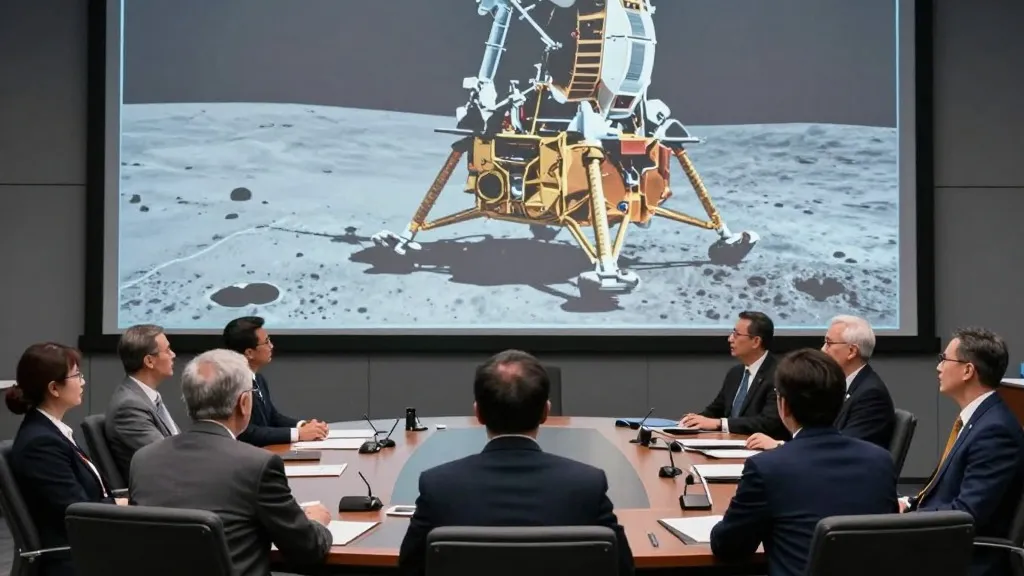
NASA officials laid out a detailed roadmap Friday for putting astronauts back on the lunar surface, potentially as early as 2028. The agency used a lengthy briefing to walk through how it plans to achieve that goal as part of its Artemis Program, outlining specific mission architectures for both SpaceX and Blue Origin.
While some elements of this approach have been previously reported by various outlets, this marked the first time NASA officially presented the full, updated plan and acknowledged significant shifts in its overall structure. The agency is now detailing how its Orion spacecraft will integrate with the landers being built by its commercial partners.
For SpaceX, the revised plan involves the Orion spacecraft docking with the Starship lunar lander while in high-Earth orbit, before the combined vehicle begins its transit to the Moon. This arrangement eliminates the need for a near-Earth rendezvous, which was a key request from SpaceX engineers earlier this year.
The agency's plans for Blue Origin's lander are also taking shape. The mission architecture for the Blue Moon lander calls for four launches of the New Glenn rocket to support the mission, but it will not require any refueling between spacecraft. NASA also noted that the Blue Moon lander could potentially meet with Orion in low-Lunar orbit.
NASA continues to target a launch for the Artemis III mission by summer 2027. This mission is planned as a demonstration, involving the docking of both the Blue Moon and Starship landers near Earth. The agency is still tracking toward a 2028 launch for Artemis IV, which would include an actual landing on the lunar surface.
NASA Administrator Jared Isaacman expressed confidence in the agency's ability to meet these goals. "This is an achievable path we are on right now," Isaacman said. "We have the mandate, we have the resources, and the support from our stakeholders to be able to execute, and that's what we intend to do."
The agency's leadership has worked to adjust plans for every element of the Artemis Program to help the lander companies move forward more quickly. The question now is whether these revised timelines can be held to.
For SpaceX, the plan to dock in high-Earth orbit resolves a long-standing issue. Engineers had previously sought to remove the requirement to dock with Orion in a near-rectilinear halo orbit around the Moon, as that approach required more energy and presented other difficulties. NASA's cancellation of the Lunar Gateway earlier this year allowed the agency to change this part of the plan.
With these new details in place, the agency is moving forward with its preparations. The next steps will involve continuing to prepare for the Artemis III demonstration mission scheduled for summer 2027 and working toward the subsequent mission that will land on the Moon.
Source: Ars Technica